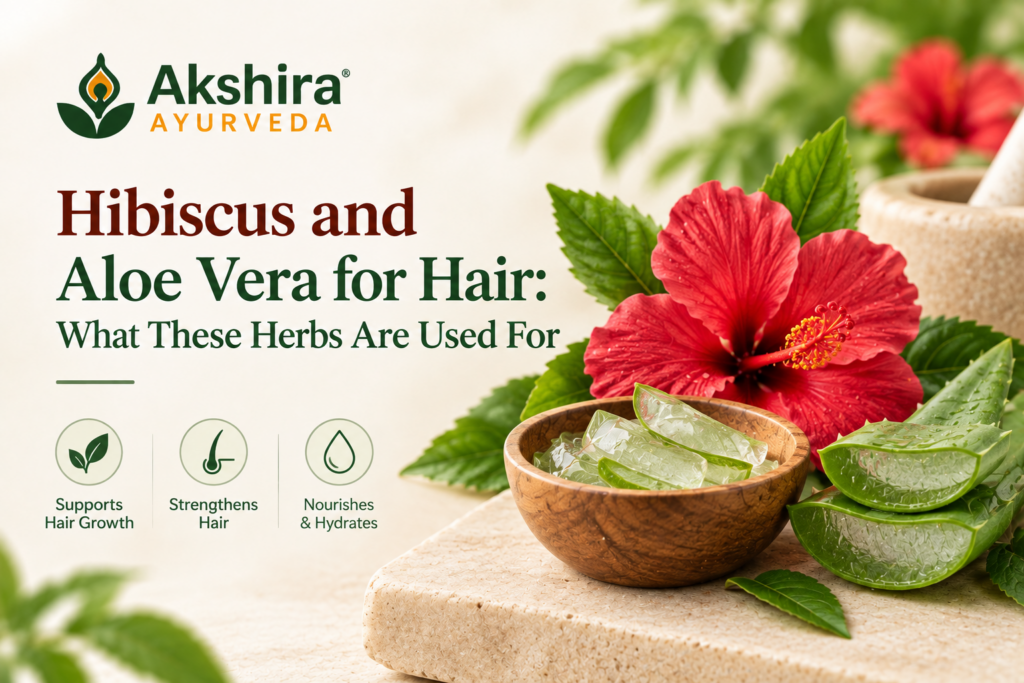
Hibiscus and aloe vera appear in many traditional hair and scalp products. Both have a long history of cosmetic and herbal use, but it helps to keep expectations realistic.
Hibiscus in hair care
Hibiscus is commonly used in oils, masks and cleansers. In traditional routines, it is valued for the way it conditions the hair and fits well into scalp-care practices.
That does not mean a hibiscus shampoo can treat medical hair loss. Its role is better understood as part of regular cleansing and cosmetic hair care.
Aloe vera in hair care
Aloe vera is widely used in skin and scalp products because of its soothing, lightweight texture. In a cleanser, it can help make the formula feel gentler than a very harsh, stripping shampoo.
People with sensitive skin should still patch-test new products because botanical ingredients can cause reactions in some individuals.
Using both in a wash routine
The Akshira Ayurveda Keshakahi Hair Cleanser combines hibiscus and aloe vera in a shampoo intended for regular hair and scalp cleansing.
Apply shampoo mainly to the scalp, massage gently, and let the lather run through the lengths while rinsing. If you use a pre-wash oil, you may need a second light cleanse depending on the amount used.
Pairing with hair oil
If your hair feels dry, try using a small amount of Keshakahi Hair Oil before washing. Our guide on Ayurvedic-style hair oiling explains a simple method.
When herbs are not enough
Persistent dandruff, scalp sores, bald patches or sudden heavy shedding should be evaluated by a medical professional. A cosmetic shampoo can be useful for routine care, but it should not delay treatment when there may be an underlying condition.
These statements describe traditional Ayurvedic use. Akshira Ayurveda products are not intended to diagnose, treat, cure or prevent any disease. Consult a physician before use if you are pregnant, nursing or under medication.